
Roles Reduce Decision Load
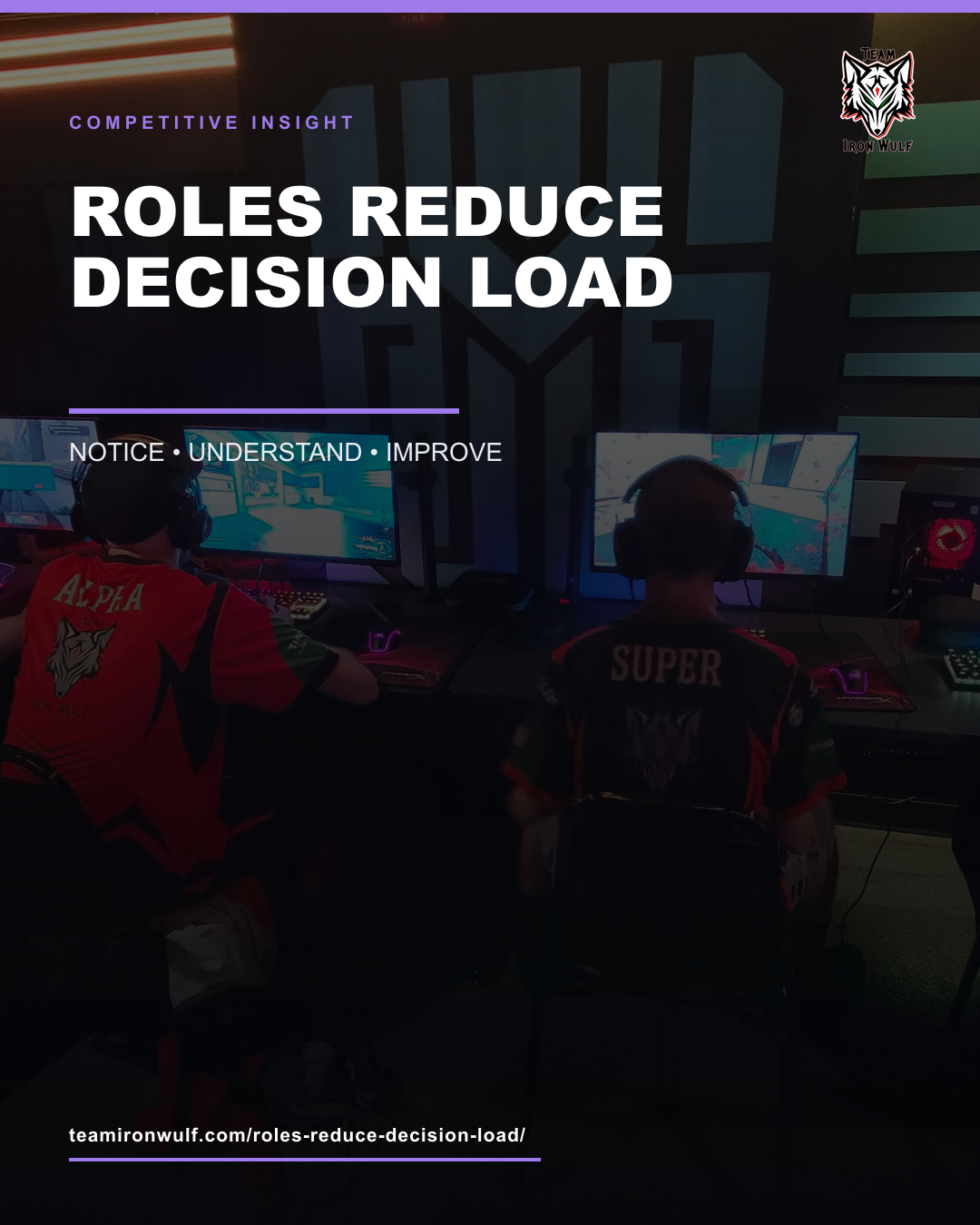
Roles Reduce Decision Load. That idea matters because competitive teams lose time when an important principle stays vague. Clear responsibilities help players act faster because fewer choices must be negotiated in the moment.
What the principle means
The point is not a slogan. It describes a repeatable relationship between preparation, information, decisions, and results. Teams gain an advantage when they turn that relationship into a shared behavior instead of leaving it to individual interpretation.
Why it affects performance
Competitive environments compress time. Unclear roles, late information, and inconsistent preparation force players to spend attention solving avoidable problems. A simple shared standard gives that attention back to positioning, timing, adaptation, and execution.
What it looks like in practice
Watch for the principle during ordinary sessions: who confirms, who communicates early, how the team responds after a mistake, and whether the same problem returns. The evidence is usually found in small repeated actions, not only in highlights or final scores.
How Team Iron Wulf applies it
Team Iron Wulf connects player development, organized scrims, community play, content, and partnerships through clear next steps. The goal is a system in which good participation becomes visible and progress can lead to stronger opportunities.
Apply this idea during team practice
Use roles reduce decision load as the focus of one session rather than trying to repair everything at once. Before play begins, repeat the goal in plain language. During the session, collect two or three examples that show whether the behavior appeared at the right moment. Afterward, compare those examples with the intended result: clear responsibilities help players act faster because fewer choices must be negotiated in the moment.
The review should end with a decision. Keep the behavior if it made play clearer or more repeatable. Simplify it if teammates understood the goal but could not execute it quickly. Replace it if the evidence shows that it solved the wrong problem. That decision turns an interesting idea into usable competitive work.
Put it to work
Choose one practical action from this idea and use it in the next session. Tell the people involved what you are testing, keep the observation simple, and review the outcome while it is still fresh. Consistent small corrections build stronger players, teams, and communities.
Explore the Team Iron Wulf program: teamironwulf.com/competitive-program/
Learn how organized scrims work: teamironwulf.com/scrim/